The challenge
When I joined the team, marketing was pouring users into the funnel, and sign-ups were at an all-time high. But when we pulled the cohort retention data for Day 30, we saw the challenge.
65% of our learners were gone within a month, it's not bad in EdTech industry but insufficient for the company's growth targets.
The prevailing theory in the product team was a usability issue. The belief was that if we just made the interface cleaner and the buttons brighter, people would stay. But the problem was deeper.
Understanding the learners
Before redesign anything, the deep-dive user research revealed that 70% of our active users were career-driven.
This segment wasn't motivated by "fun" or "badges" in the traditional sense. They were motivated by professional fear.
The existing design treated them like casual hobbyists, offering generic progress bars that failed to map to real-world career value.
Top challenges from student survey
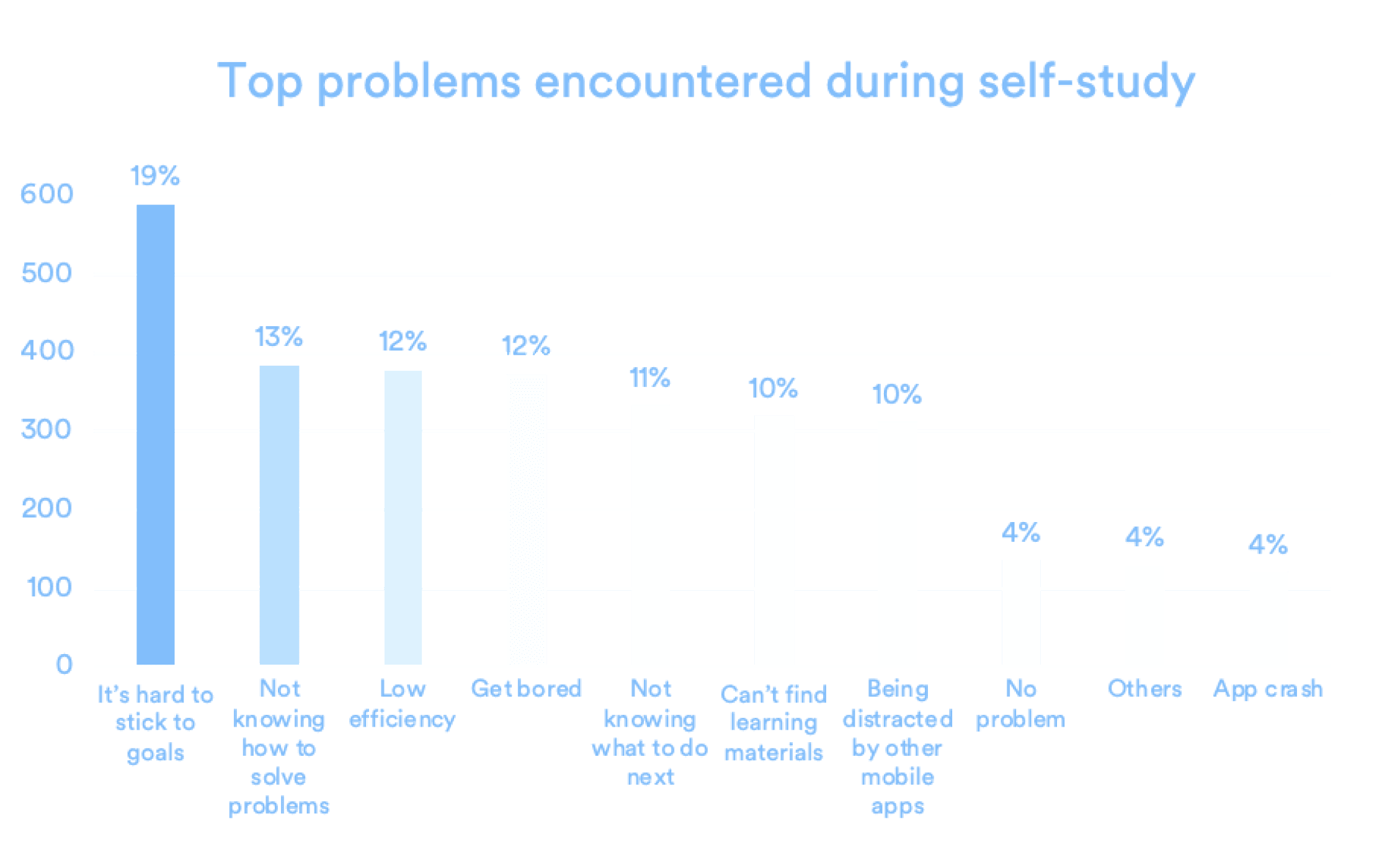
Over 1,500 students took the survey. Stated top challenges are common across all student persona/segments.
It’s hard to stick to goals
Not knowing how to solve problems
Low efficiency
Get bored
Not knowing what to do next
Can’t find learning materials
Being distracted by other mobile apps
No problem
Others
App crash
19%
13%
12%
12%
11%
10%
10%
4%
4%
4%

A few follow up interview conducted to understand the reason
These interviews were particularly helpful in uncovering the reasons behind user behaviours, providing qualitative data that added depth to our understanding.
The strategy and design
We moved away from ad-hoc feature updates (like V5 final-final) toward a hypothesis-driven growth model.
Hypothesis A: Users will study harder to protect a digital asset they have built than to gain a new one.
Hypothesis B: For the career segment, time-to-competency is the only metric that matters. We needed to validate their skills immediately.
Mapping current systems
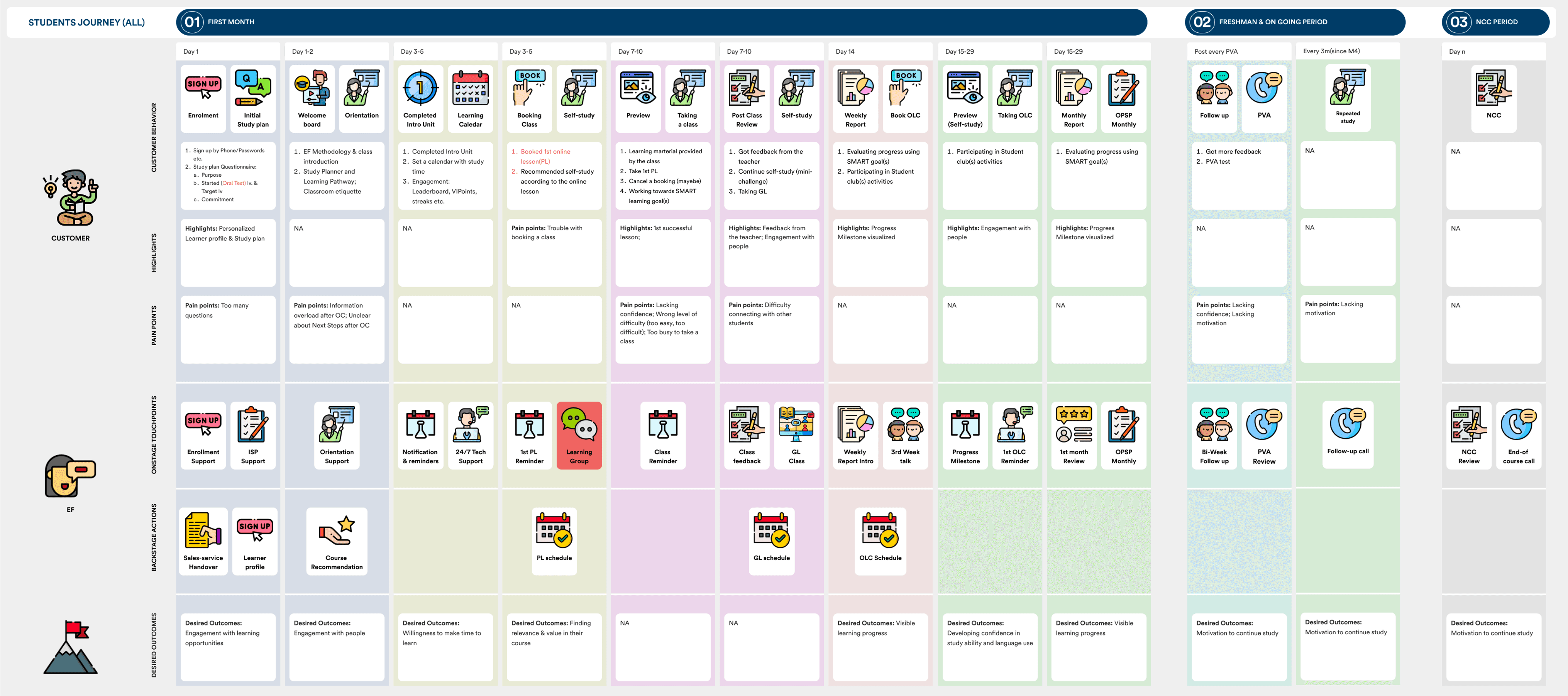
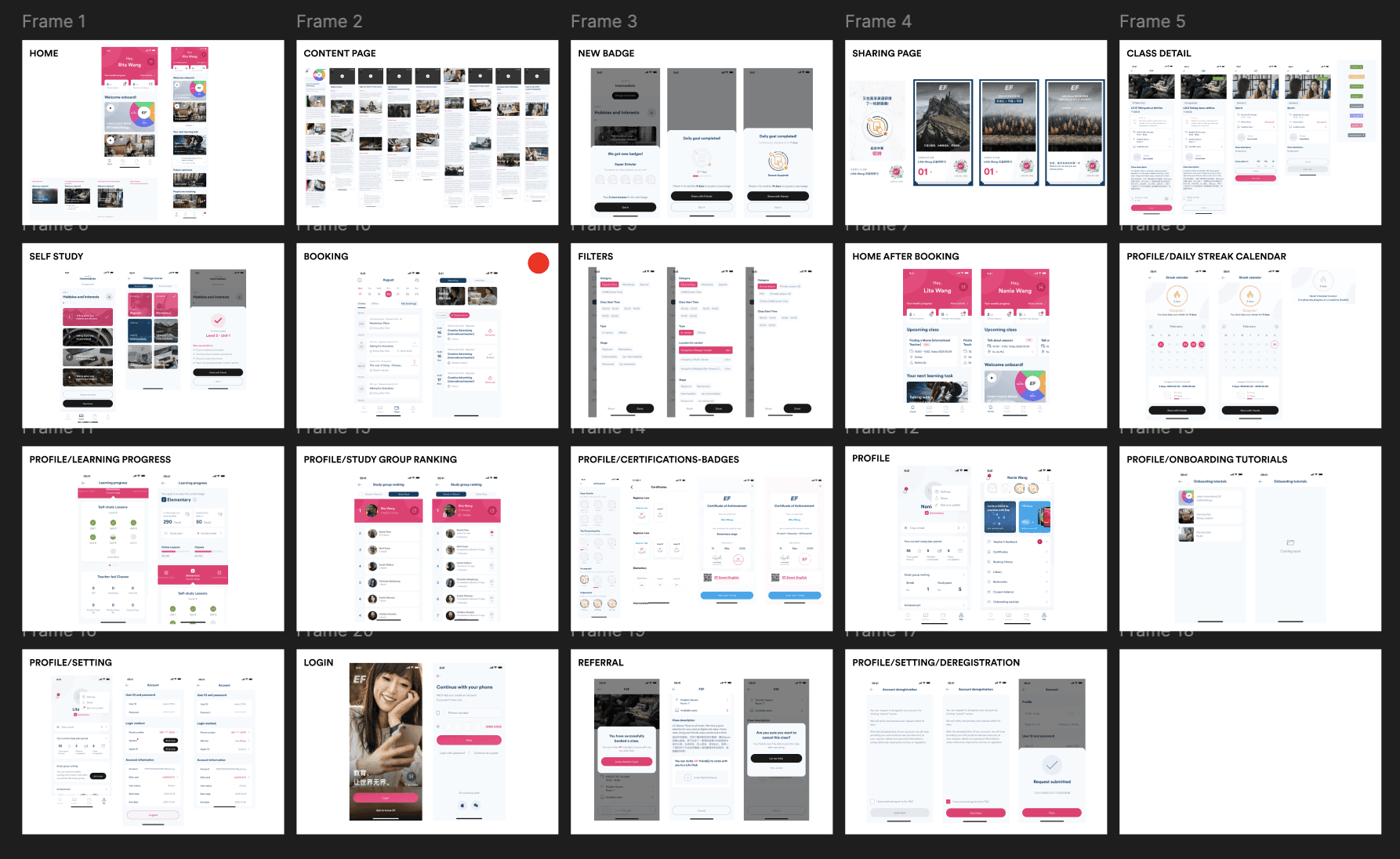
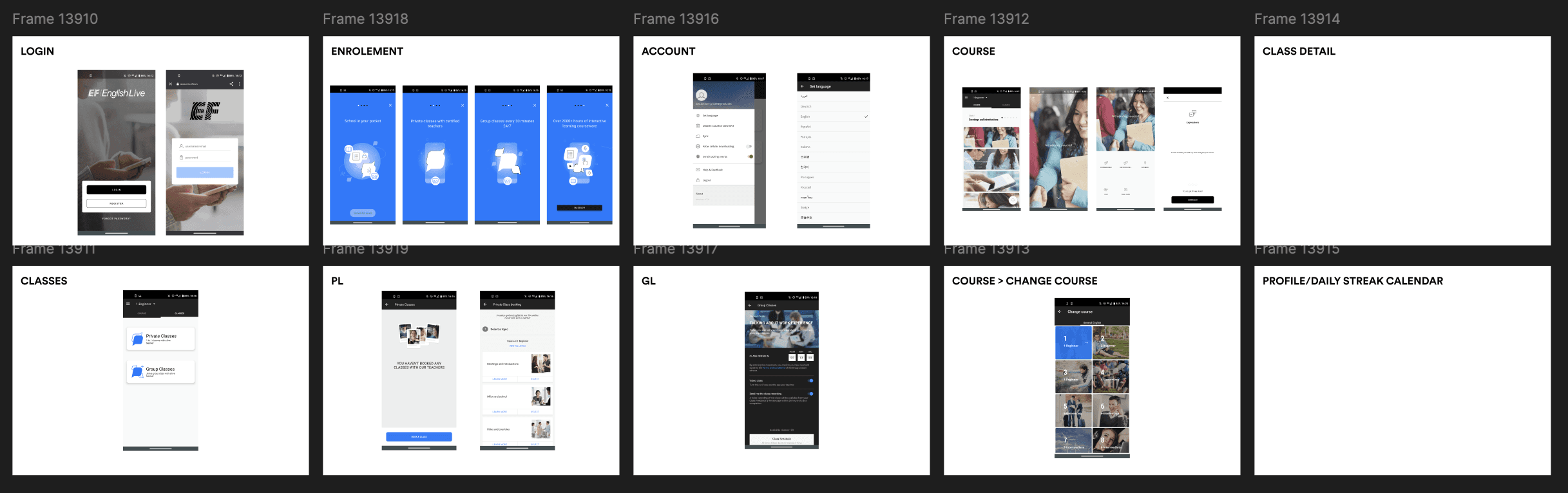
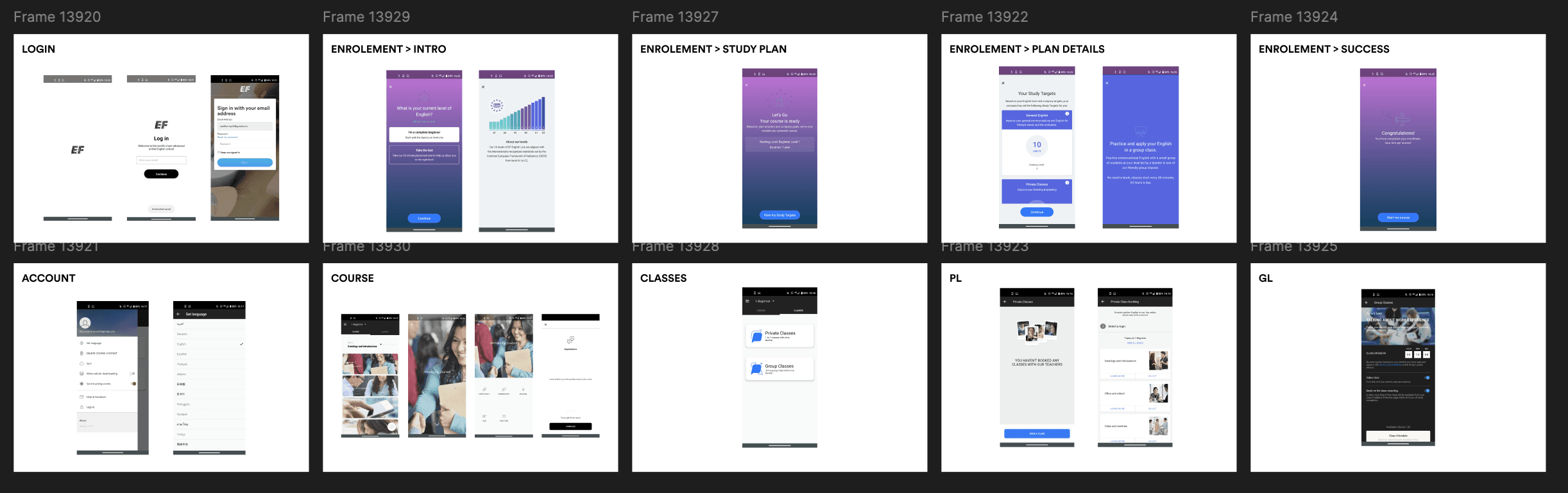
We mapped every screen in the old systems to understand user flows and pain points. This thorough mapping gave us a solid foundation for improvement and innovation.
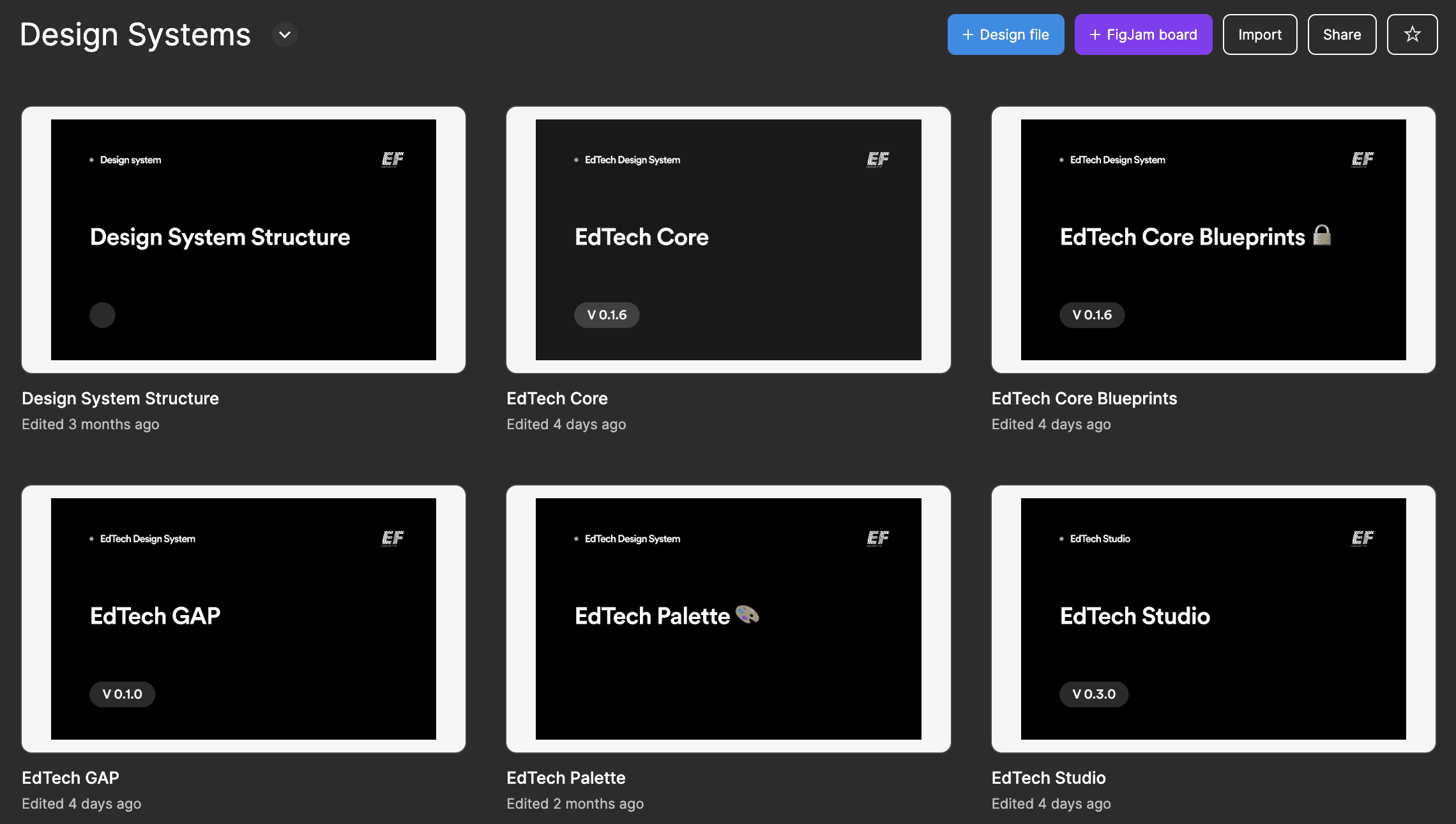
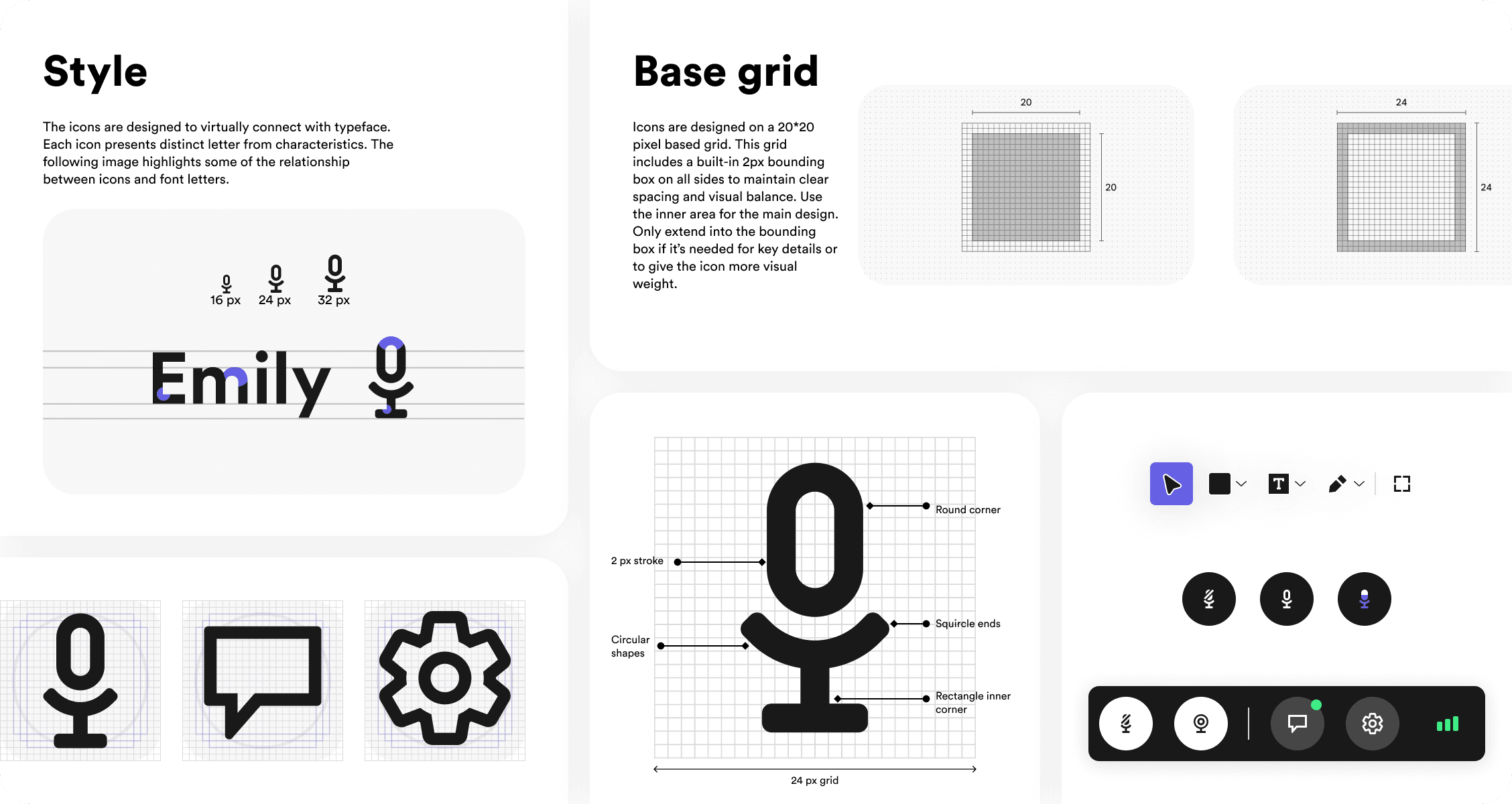
Also we built a scalable design system to maintain consistency and usability.
The execution
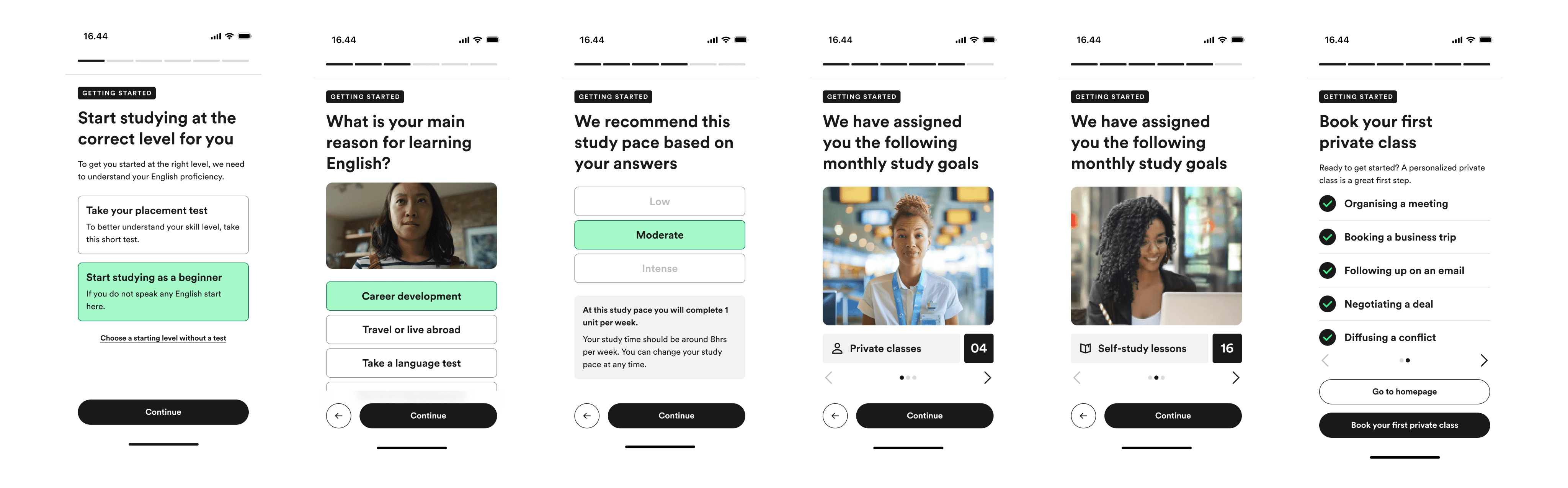
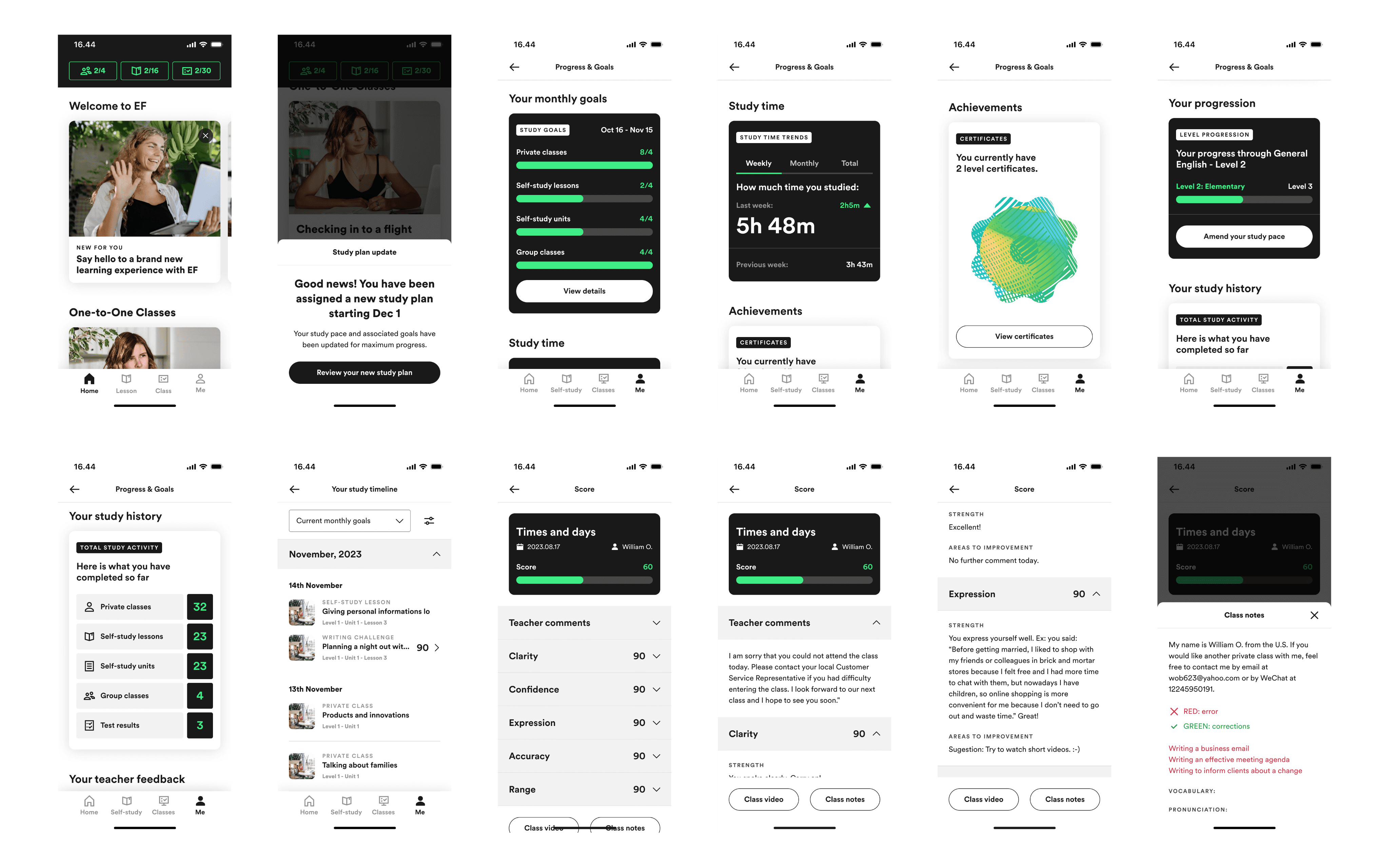
Added persona types during the onboarding process. Users now set their start level, setting a specific career goal (e.g., "Interview in English") and committing to a schedule.
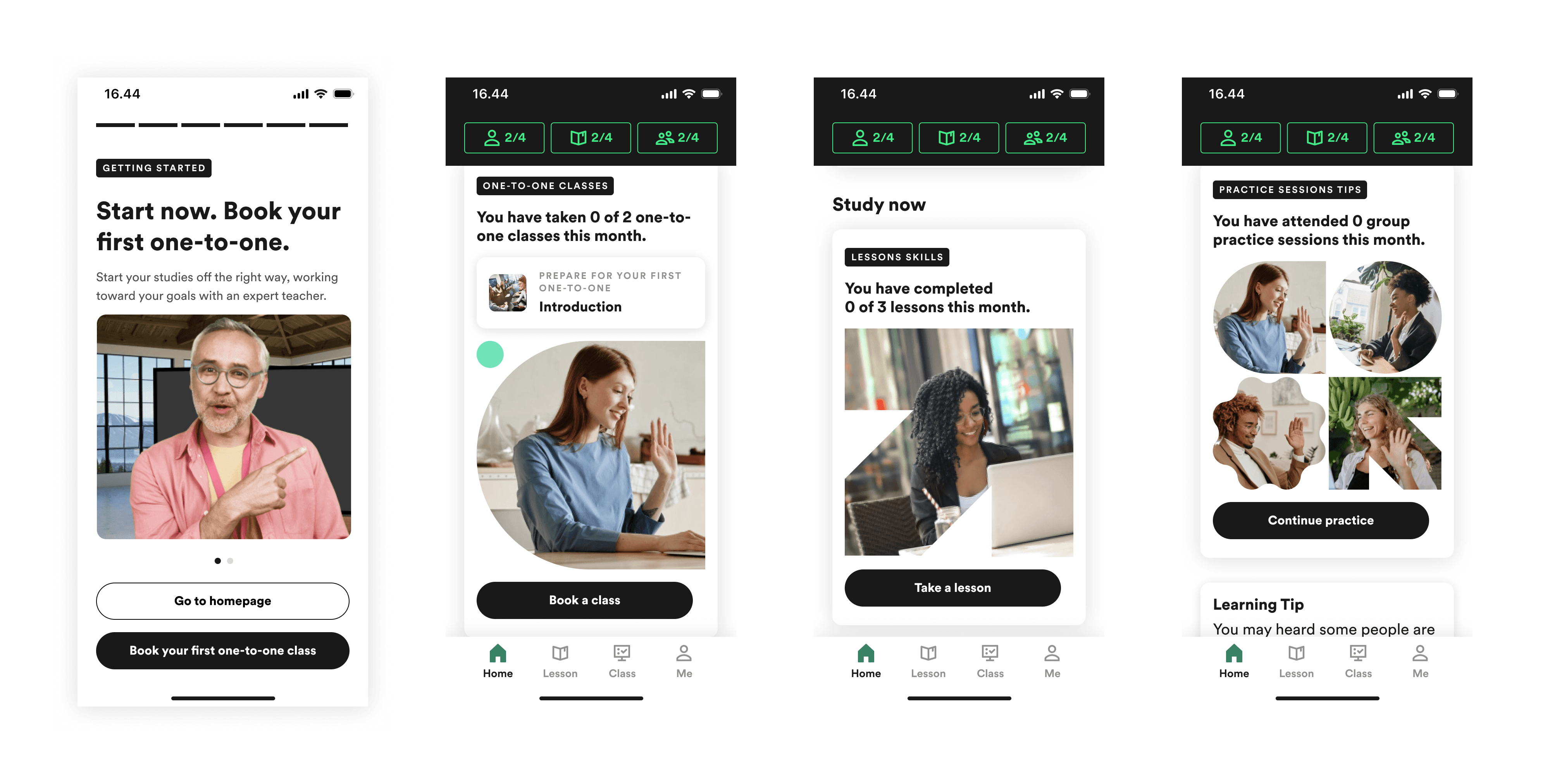
Updated the progress bar with a Streak Freeze where users could be motivated by their own consistency.
This shifted the daily trigger from "I should learn" to "I don't want to lose my streak".
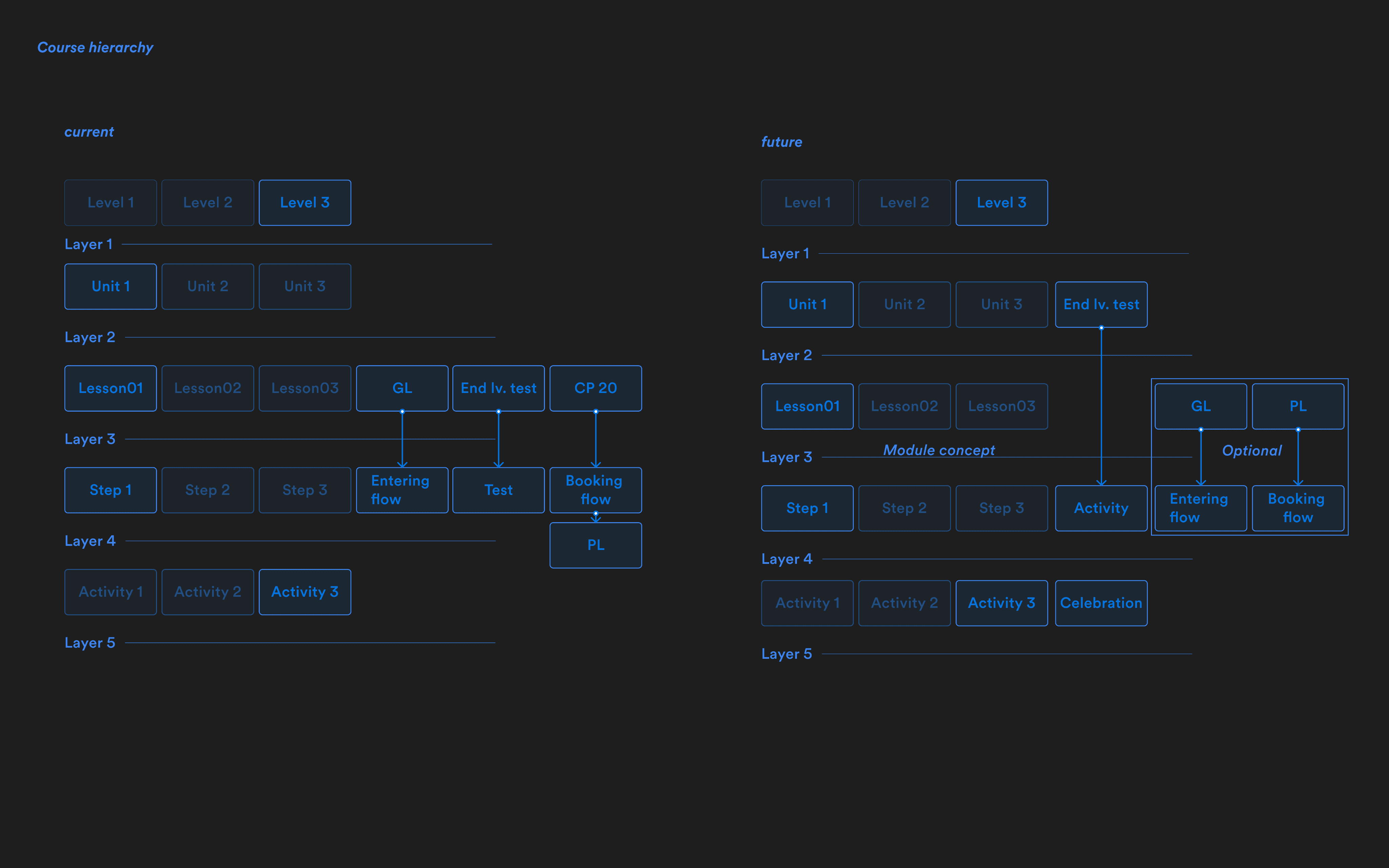
Restructured the information architecture to align with career outcomes. Instead of "Level 4 Complete," the milestone became "Certified: Business Introduction."
These micro-certs were designed to be instantly shareable on LinkedIn, closing the loop between app effort and career reward.
The result
A design system was build the same time to maintain the consistency between B2B and B2C. By moving beyond user satisfaction and focusing on behavioural economics, the redesign delivered measurable business value:
Day 30 retention increased, significantly impacting the Life Time Value of the cohort.
The commitment contract onboarding drove a x% increase in trial conversions, directly contributing to annual recurring revenue.
The design team is effectively in favour of north star retention metrics, aligning design directly with the profit and loss statement.
The challenge
When I joined the team, marketing was pouring users into the funnel, and sign-ups were at an all-time high. But when we pulled the cohort retention data for Day 30, we saw the challenge.
65% of our learners were gone within a month, it's not bad in EdTech industry but insufficient for the company's growth targets.
The prevailing theory in the product team was a usability issue. The belief was that if we just made the interface cleaner and the buttons brighter, people would stay. But the problem was deeper.
Understanding the learners
Before redesign anything, the deep-dive user research revealed that 70% of our active users were career-driven.
This segment wasn't motivated by "fun" or "badges" in the traditional sense. They were motivated by professional fear.
The existing design treated them like casual hobbyists, offering generic progress bars that failed to map to real-world career value.
Top challenges from student survey
Over 1,500 students took the survey. Stated top challenges are common across all student persona/segments.
It’s hard to stick to goals
Not knowing how to solve problems
Low efficiency
Get bored
Not knowing what to do next
Can’t find learning materials
Being distracted by other mobile apps
No problem
Others
App crash
19%
13%
12%
12%
11%
10%
10%
4%
4%
4%
A few follow up interview conducted to understand the reason
These interviews were particularly helpful in uncovering the reasons behind user behaviours, providing qualitative data that added depth to our understanding.
The strategy and design
We moved away from ad-hoc feature updates (like V5 final-final) toward a hypothesis-driven growth model.
Hypothesis A: Users will study harder to protect a digital asset they have built than to gain a new one.
Hypothesis B: For the career segment, time-to-competency is the only metric that matters. We needed to validate their skills immediately.
Mapping current systems
We mapped every screen in the old systems to understand user flows and pain points. This thorough mapping gave us a solid foundation for improvement and innovation.
Also we built a scalable design system to maintain consistency and usability.
The execution
Added persona types during the onboarding process. Users now set their start level, setting a specific career goal (e.g., "Interview in English") and committing to a schedule.
Updated the progress bar with a Streak Freeze where users could be motivated by their own consistency.
This shifted the daily trigger from "I should learn" to "I don't want to lose my streak".
Restructured the information architecture to align with career outcomes. Instead of "Level 4 Complete," the milestone became "Certified: Business Introduction."
These micro-certs were designed to be instantly shareable on LinkedIn, closing the loop between app effort and career reward.
The result
A design system was build the same time to maintain the consistency between B2B and B2C. By moving beyond user satisfaction and focusing on behavioural economics, the redesign delivered measurable business value:
Day 30 retention increased, significantly impacting the Life Time Value of the cohort.
The commitment contract onboarding drove a x% increase in trial conversions, directly contributing to annual recurring revenue.
The design team is effectively in favour of north star retention metrics, aligning design directly with the profit and loss statement.
Optimising LTV for EF online learning platform
2022 - 2024
Huan Feng
©2026
huanfengme@gmail.com
Huan Feng
©2026
huanfengme@gmail.com
Huan Feng
©2026
huanfengme@gmail.com
Huan Feng
©2026
huanfengme@gmail.com